Have you been living in the UK for a while and want to start thinking about British citizenship? It’s a big step and one that needs careful planning and thought. It also needs a ton of paperwork – the list of British citizenship documents is super long!
Like any process around visas, paperwork, or bureaucracy, the British citizenship system is long and complicated. Don’t worry, I’ve got you covered with this comprehensive guide for becoming a British citizen and all the documentation you’re going to need along the way!
Let’s dive in and find out more.
How Can You Become a British Citizen?
There are a few different ways to become a British citizen, and of course, some are much easier than others!
By birth
This is probably the easiest way to get British citizenship if you’re lucky enough to have one British parent who is a citizen, and you were born after January 1st, 1983.
Alternatively, if you were born after January 13th, 2010, and one of your parents was a part of the British Armed Forces when you were born, you might be eligible for British citizenship.
Through your parents
If you were born before January 1st, 1983, and you have one British parent, you could be eligible by descent. While you can get an ancestry visa if you have British grandparents, the citizenship allowance only goes back one generation.
So, if you’re in the UK thanks to your British grandparents, you’ll have to get citizenship through naturalization.
Through adoption
If you were adopted by a British parent on or after January 1st, 1983, and it was legalized in the UK, Isle of Man, Channel Islands, or Falkland Islands court, you’re eligible for British citizenship.
If you were adopted in a British Overseas Territory like Gibraltar or the British Virgin Islands on or after May 21st, 2002, you’re also eligible for British citizenship.
Registering for Naturalization
So, if you don’t have any familial ties to the UK, but you have been living in the UK for over five years, you can begin registering for the naturalization process.
It’s the most common way for non-UK citizens to get British citizenship, and I’ll go into this process more in the next section.
Becoming a British citizen by Naturalisation
If you’re looking to become a British citizen and neither of your parents are British citizens, then chances are you’re going to need to go through the naturalization process. Of course, as it’s a type of official government process, there is a ton of paperwork and red tape involved.
In addition to that, you have to hit a lot of criteria before you can even register for the naturalization process.
You need to be:
- Over 18 years old.
- Be of sound mind.
- Have a good knowledge of English.
- Have passed the Life in the UK test.
- Be of “good character”.
Now, some of those things are super vague. Like what counts as “good character” or “sound mind”? Essentially, it’s probably best if you haven’t been in a psych ward or arrested recently if you’re applying for naturalization.
You also need to have lived in the UK for at least the past five years and fulfilled one of the following criteria in the past 12 months:
- Received Indefinite leave to remain (ILR) for at least 12 months unless you have a British spouse.
- Received Indefinite leave to remain under the EU settlement scheme or,
- Received Indefinite leave to enter the UK.
So, as you can see, there are a fair few boxes that you need to check before you can even get the naturalization process started!
How Long Do You Need to Live in the UK to Apply for Citizenship?
Who loves doing a ton of maths before applying for British citizenship? Well, it’s not just that you have to have lived in the UK for the past 5 years, you also can’t have left for a certain period of time either.
This varies based on your situation and which visa you’re on while you’re in the UK, but here are the general timelines.

The vast majority of the time, you cannot be out of the country for more than 450 days in the entire 5-year period. Sometimes this goes up to 480 days, and in very specific cases, you can spend up to 900 days out of the UK in the past 5 years.
Make sure you check the conditions of your specific visa to find out the exact allowances.
Finally, to make things even more confusing, in the last year before you apply for citizenship, you can only spend a maximum of 90 days out of the UK. In some cases, this is increased to 100 days, but that’s not super common. Again, check your visa conditions and plan your vacations accordingly!
If you’re joining your British spouse in the UK, you only need to have lived in the UK for 3 years, and you can only spend up to 270 days out of the UK during that time. On the extended end, instead of 900 days, you can only spend 540 days out of the country.
What Documents Do You Need to Apply for British Citizenship?
Okay, now we’re moving on to the juicy part of the process – the documentation. You need a lot to apply for British citizenship, so make a note of this list and start gathering your documentation as soon as possible.
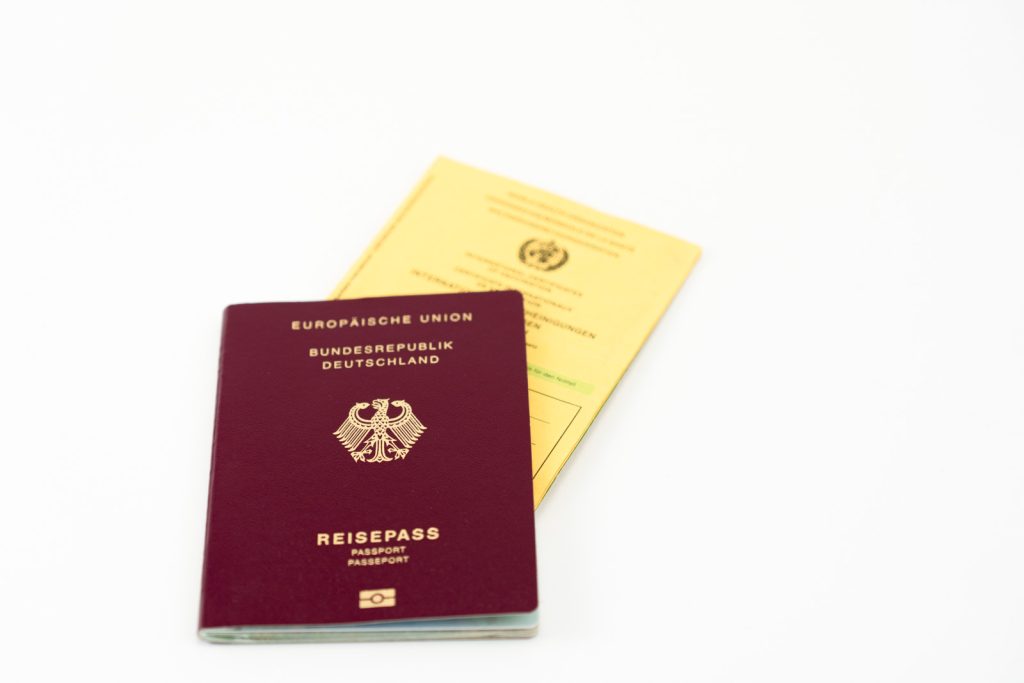
- Current passport. This needs to be the original version of your current passport (no photocopies!), complete with any visas that you’ve held for the UK or other countries.
- Your Biometric Residence Permit (BRP) card. If you’re in the UK longer than six months, the Home Office issues this permit that has all your details, including your immigration status, fingerprints, passport photos – the lot. This can run out a few times while you’re living in the UK, so make sure it’s in date when you’re applying for your British citizenship.
- National insurance number. Sometimes you can find your NI number on your BRP, but if not, make sure you’ve applied for your National Insurance before applying for citizenship.
- A certificate proving your English language levels. This can be a degree certificate if your course was taught in English or in the UK, or it can be an approved IELTS, LanguageCert, Pearson, or Trinity College London test.
- Proof that you’ve passed your citizenship test. Once you’ve passed, you’ll be given a signed and stamped test certificate (if you passed before October 1st, 2019) or a specific test reference number.
- Copies of your tax records. Your tax reference number can easily be found on your payslip.
- Documents showing your previous employment and living history. So, this includes payslips, tenancy agreements, or documents like bank statements with your previous address on them – things like that.
- Documents showing time spent out of the country. As I’ve outlined, you can only spend a limited time outside of the UK if you’re applying for citizenship. You need to share the dates, the duration, and why you left i.e., vacation, work trips, visiting family, etc.
- Evidence of freedom from immigration time restrictions. This is only really relevant if you’re joining your British partner in the UK, and you can normally find this info on your BRP. If not, you can submit a letter from the Home Office saying you’re free from specific immigration conditions.
- Details for two referees. Much like a job interview, you need to submit the personal details of two referees who can prove that you are who you say you are. They can’t be related to you, be migrated agents, or work for the Home Office. They also can’t have had a criminal conviction in the past 10 years, so make sure you double-check this with your intended referee before submitting them.
Do I Need to Complete a British Citizenship Test?
Yes, you need to complete a British Citizenship Test. It’s called the “Life in the UK” test which contains 24 questions all about British cultures and traditions.
Some visas require you to do this before getting to the British Citizenship stage, including getting your Indefinite Leave to Remain, so you may have already completed it. If you have, you don’t have to do it again!
It costs around £50 to take the test and you need to book your test at least three days in advance, but of course, the more notice the better! It also allows you to prepare your knowledge of British customs and traditions.
To pass, you’ll need to get 18 out of 24 or more – that’s 75% – and there are a ton of free practice questions online that you can check out.
What’s the Process for Applying for British Citizenship?
So, now you know all about the different aspects of applying for British citizenship, let’s put it into a logical timeline. Here is the step-by-step process for applying for British citizenship.
Fill in your application
First things first, you need to head online and fill out your application form for British citizenship. There’s a space for supporting documents, for example, if you’re joining your partner and need to send in information about your partner.

This is not the space for all the giant list of documentation we went through above – that part goes later.
If you’re in the Channel Islands, the Isle of Man, or a British Overseas Territory, then you can’t use the online application process and need to go old school with a physical application form and scan and copy any relevant supporting documents.
Pay the application fee
Unfortunately, British citizenship is not free. At the moment, the application fee sits at a steep £1,330. Once you’ve submitted your application, you’ll be directed to pay the fee and you’ll receive an email confirmation – this serves as your receipt of payment, so hold onto this!
Send in your documents
Now you’re in for the super fun part! Once your application is sent in and paid for, you need to upload all your supporting documentation. This section can be found on the UKVCAS (UK Visa and Citizenship Application Services) website.
When you log into your account, you’ll see a page with a list of all the documents that you need to submit, along with a ton of guidelines about sizing, orientation, and how many copies you need to send in. Simply follow all the instructions and you’ll have completed the checklist in no time!
Book your appointment at UKVCAS
In order to submit all your biometric information, you need to book an in-person appointment at UKVCAS (UK Visa and Citizenship Application Services). There are free appointments and paid service appointments and there are some differences.
The free ones get booked up quickly and can only be made in certain major cities, so you need to book them months in advance. These locations are in
- Belfast
- Birmingham
- Cardiff
- Central London
- Croydon
- Glasgow
- Manchester
The paid services appointment costs £70, and you can also scan your documents on the day of this meeting, rather than submitting them all online. Honestly, this is the most common kind of appointment that you’re going to find, so account for the extra £70 when budgeting for the citizenship process.
Get your biometrics sorted
As part of the citizenship process, you need to scan your fingerprints, get your photo taken, and submit a digital signature on file. When you book your appointment, you’ll receive a letter with a QR code on it. You need to bring this with you and all of the original supporting documentation as well.
Celebrate at your citizenship ceremony!
Once you’ve completed all these steps, and your application has been checked, you’ll receive a letter confirming if you’ve been granted citizenship or not. After this, you need to attend a citizenship ceremony.
Here, you’ll make an oath saying you’ll uphold British laws and respect the rights of UK citizens, then you’ll be given your British citizenship certificate and a welcome pack. Congrats! You’re now a British citizen!
British Citizenship FAQs
Let’s round out this guide to British citizenship with a few final frequently asked questions to help you feel prepared for the process.
How long does British citizenship take?
This honestly varies, but on average, it takes six months for the British citizenship process to reach its conclusion. Following COVID and Brexit, this is apparently taking longer at the moment, as there was a backlog of applications that the UKVCAS is trying to get through.
Can you get dual citizenship in the UK?
Yes, you actually can get dual citizenship in the UK! Although many countries are a bit funny about dual citizenship and some places have pretty much banned dual citizenship, the UK isn’t one of them. You can even retain your British passport if you’re a dual citizen, which is a rare perk.
What are the benefits of British citizenship?
If this guide has proven anything, the British citizenship process is a lengthy, expensive, and confusing process. So, is it worth it, and what are the benefits of actually being a British citizen?

Well, there’s a pretty long list of perks at the moment, including not having to fill in and renew visa paperwork every couple of years or so, which in my opinion is a pretty huge bonus!
Some of the major benefits of being a British citizen are that you have
- The right to vote,
- The right to work and live in the UK indefinitely,
- The right to have a British passport,
- The right to free NHS medical care,
- The right to come and go from the UK as you wish with no restrictions,
- The ability to travel without a visa to a massive 187 countries.
Is the British Citizenship Test hard?
Realistically, no, the British Citizenship test is not that hard, especially if you do a few practice tests before you take the official paid one. In fact, only 18% of people who take the British Citizenship test actually fail it, which is really low when you think that over 170,000 people take the test each year.
Does the Life in the UK Test have an expiration date?
No, the Life in the UK test or British Citizenship test doesn’t have an expiration date. It’s not like a driving theory test or a license that you have to redo if it’s been a certain number of years. Once you’ve passed your Life in the UK test, that’s you completely done.
Make sure to hold onto the signed and stamped pass certificate or test reference number, as this is your proof that you’ve completed and passed the test.
What English Language Level is needed for British Citizenship?
As with many other citizenship or permanent residency permits, the level of English proficiency that you need to achieve is B1. This is a worldwide recognized language proficiency scale called the CEFR scale that uses A1-A2 for beginners, B1-B2 for intermediates, and C1-C2 for advanced or fluent speakers.