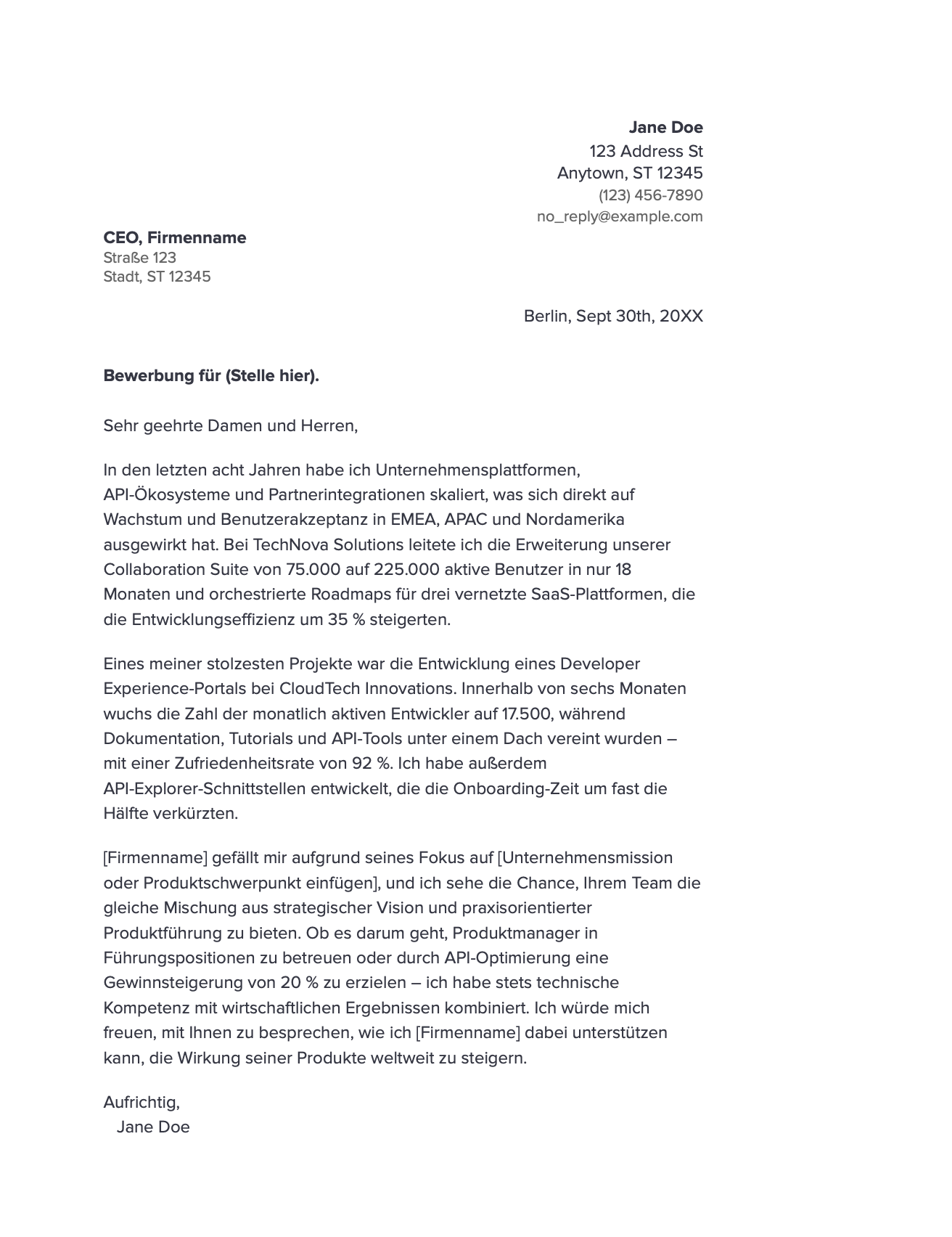
If you’re trying to land a job in Germany, but your applications don’t seem to be hitting the mark, the trouble might lie in your cover letter. There are plenty of German cover letter samples online, but you need to understand the structure, formatting, and content of a German cover letter in order to apply for jobs in Germany successfully.
As with many things in Germany, you’ll find that there’s a standardized way of doing things. The formatting and structuring of a German cover letter are very deliberate to help hiring managers find what they need quickly and efficiently. Let’s dive in and find out more.
Things to Note About Writing a German Cover Letter
Of course, there are a few things to be aware of before you start writing your German cover letter. These things might seem like common sense in places, but you’d be amazed at how many people forget to double-check or remember to use spell-check.
Length
Unlike German CVs, a German cover letter should be no longer than one page. This is the same for most countries. You have to think that “cover” is just the first piece of paper on top of your application stack.
Underneath will be your CV and any other supporting portfolios or application forms that have been requested. As such, you need to be concise throughout your cover letter.
Formatting
You need to ensure that you adhere to specific formatting rules for your cover letter. This isn’t the space for design flair, unless you’re going for a design-related job.
At its core, it’s a letter, so you need to format it to look like a formal letter.
- Use Times New Roman or Arial for the font
- Use font size 11-12
- Make sure your font is the same as your CV
- Use paragraphs, not bullet points
- Only include 3-5 paragraphs in your cover letter
- Save it in a PDF format
This is the standard formatting across the majority of German cover letter samples. It makes it easy to read and easy to digest. It also shows that you understand the hiring conventions, which can endear the hiring managers to your cause.
Languages
If you’re applying for a job in Germany, you should translate your cover letter and CV into German. If the role is in English, keep it all in English.
If you can’t speak, write, or read German, don’t apply for German-speaking roles, and don’t translate your cover letter into German. It’s misleading the recruiters into thinking that you can understand and speak German.
So, the rule of thumb is that your cover letter should match the language of the role.
How to Structure a German Cover Letter
Despite the short length of a German cover letter, there are roughly six sections. These all need to be included for the conventions of the German cover letter sample to be met.
Your details
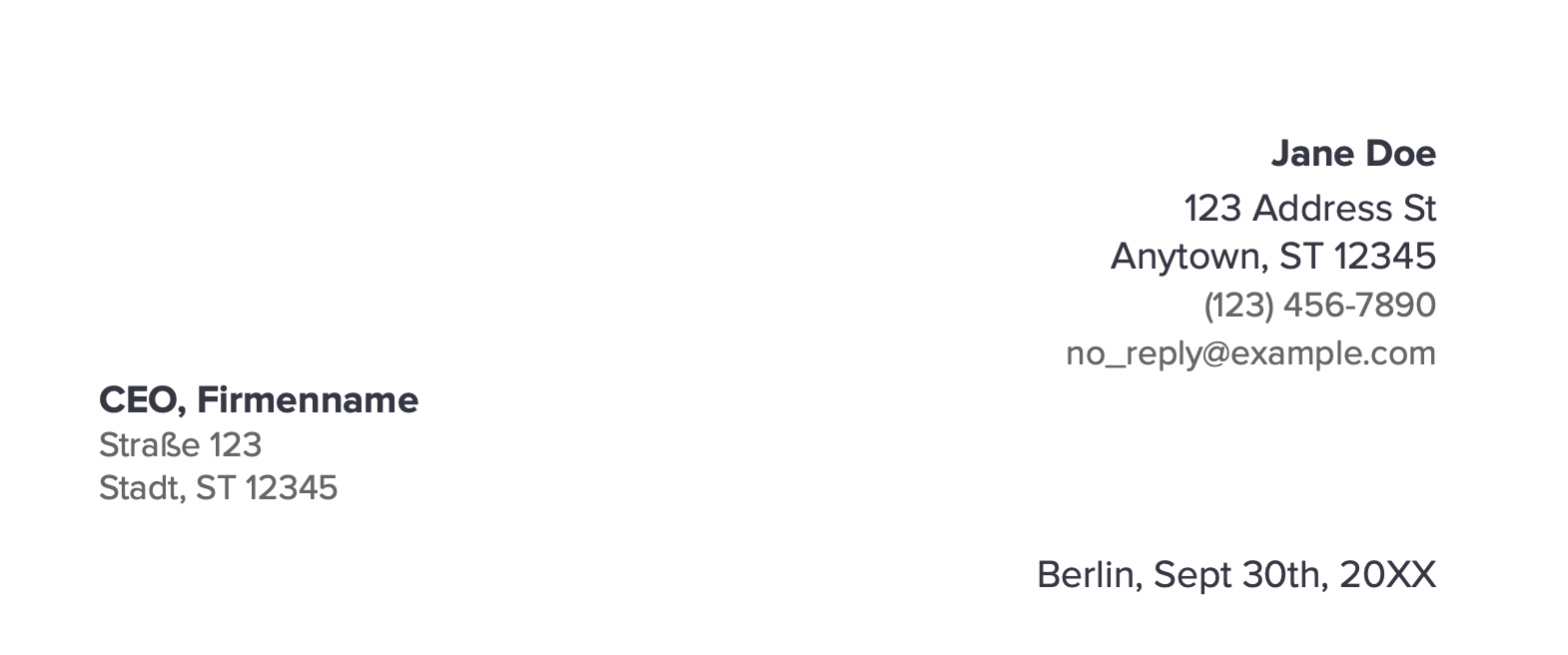
As with any letter, you should include your name, address, phone number (with dialling code), and email in the top right-hand corner. You can also have it in the top left, but the top right is more common.
While US resumes and applications lack contact details for anonymity, that’s not the case in Europe. You need to include the contact details so the recruiters can phone or email you if they’re interested.
Their details
Next, you need to get the details of the person you’re sending the email to. This goes below your details but is typically aligned to the left-hand side.
It should contain:
- The company name
- The person’s full name (usually the hiring manager)
- The address of the office
While this isn’t practically useful, it’s a convention, and it shows that you know who you’re talking to and haven’t copied and pasted your last cover letter from another business.
The date
Under the company details, write the full date on the right-hand side. This shows that the letter is up-to-date and you’ve at least recently edited the content if nothing else. It’s also a classic convention of letter-writing.
The subject line
Next up, on the left-hand side, you need to add the subject line. This is typically formatted in bold to stand out. It’ll usually say application for X role at X company.
It makes it easy for recruiters to see at a glance which position you’re applying for. Especially in larger businesses, they might be recruiting for dozens of roles at the same time.
The content
Now comes the meat of your cover letter. The main content is usually broken down into 3-5 paragraphs in total.
- Dear X
- Introduction
- Why you’re the best person for the role
- Why do you want to work for them
- Conclusion
When writing the intro and the conclusion, you want to be short and snappy, focusing on the headlines. Tell them who you are, what you want, and how interested you are in their business.

In the “why you’re the best person for the role” paragraph, line your experience up against what’s listed in the job description. Demonstrate how you’ve successfully worked in similar roles or how your transferable skills line up.
For the “why do you want to work for them” paragraph, don’t be overly gushy. State their impressive track records, talk about their innovation, or the inspirational aspects of the founder.
If you know the direction and strategy of the company, here is where you can demonstrate that knowledge and explain that you want to be involved.
The sign-off
As with any letter, you need to sign off appropriately. This is a formal letter, so opt for either “Kind regards” or “Sincerely,”. You then follow this with your signature and your printed name typed underneath.
This shows the legitimacy of the document and allows you to refresh the recruiter’s memory of your name, which is listed at the top and bottom of the German cover letter.
Tips for Writing a German Cover Letter
While the formatting and structure of a German cover letter are all well and good, there are a few other tips that you might want to be aware of.
Be concise
One page is not a lot of space to get across your suitability for a role. This becomes even smaller once you add the traditional formatting elements of a cover letter, like addresses, dates, and signatures. You need to be concise. Now is not the time for flowery language and extra adjectives.
Double-check
You should always get someone else to read through your cover letter, if possible. Even if you do double-check your work, you know what you meant to say, so it’s harder to spot mistakes.
These extra checks can also show opportunities for more clarity. You might think something is crystal clear, but to someone outside your industry, it might not be the case. Many hiring managers aren’t technical, so remember that!
If you can’t get someone else to check your German cover letter, download Grammarly for free, and it’ll show you any grammatical areas, clarity issues, and run-of-the-mill spelling errors.
Use UK-English
This is something that a lot of US expats don’t realize about working in the majority of Europe. Most companies in Europe will use UK English, rather than American English.
There are a lot of spelling differences between the two (it’s not just the occasional extra “u”), and there are words and turns of phrase that are distinctly American.
The exception to this, of course, is if you’re working for a US company with a German headquarters. You can usually match the form of English to the one used in the job description. If it’s not clear, stick with UK English to be on the safe side.
Remain professional
A German cover letter is a distinctively professional document. That means using formal language that’s devoid of slang or hyperbole. Where possible, avoid the use of contractions, as this reads as more casual.
On the whole, German recruiters don’t seem to like boastful claims. This is seemingly the opposite of US hiring managers, so it might take some getting used to.
Hyperbolic language, where you’re making incredible claims about yourself and your ability, isn’t going to get you far here, and it might do the opposite and put off some managers.
Be professional, use examples to highlight your points, and keep it concise. This is the straightforward way to have a successful German cover letter sample.
Tailor your cover letter
It’s incredibly important to tailor your cover letter to the individual role. Of course, you have to edit it for the correct business addresses, roles, and dates.
So, while you’re there, make sure you tailor the main body of the letter to match the job description.
Hiring managers can tell a generic, non-tailored cover letter a mile away. Considering there should always be a section about why you want to work for a specific company, you need to add some specifics about the track record or strategy moving forward.
It doesn’t take long to tailor your cover letter once you have the job description open. Just match up your abilities and experience, and pick a few key strategic things from the role to mention in the “why work for us” paragraph.
German Cover Letter Samples (in English and German)
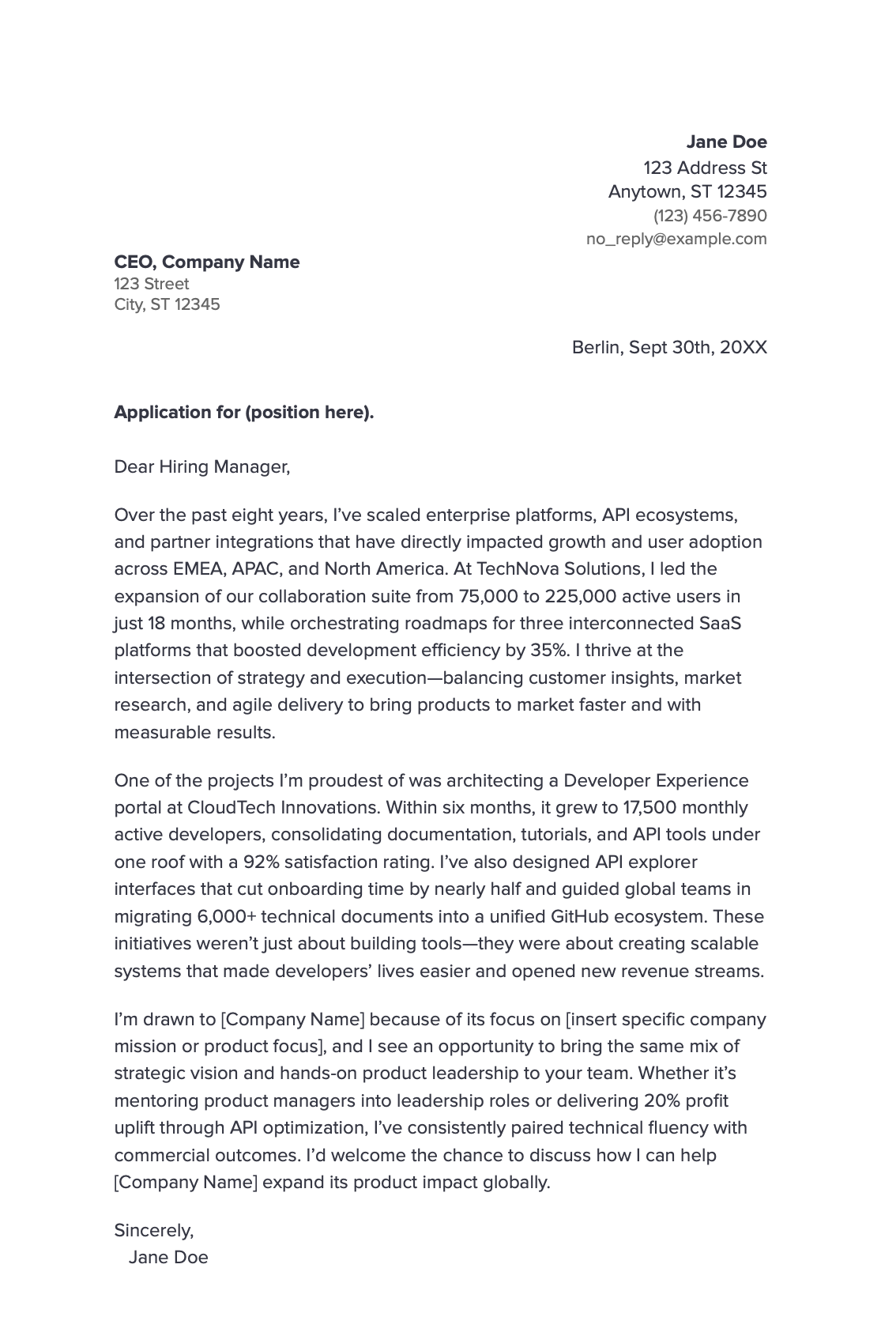
So, now that you know the basic formatting and structure, here are some German cover letter samples both in English and in German.
English Version:
German Version: